
Why AI Shorts Fail at Storytelling (And How to Fix It)
A clear breakdown of why AI-generated short videos fail at storytelling, with practical structural fixes to create meaning, tension, and clarity.
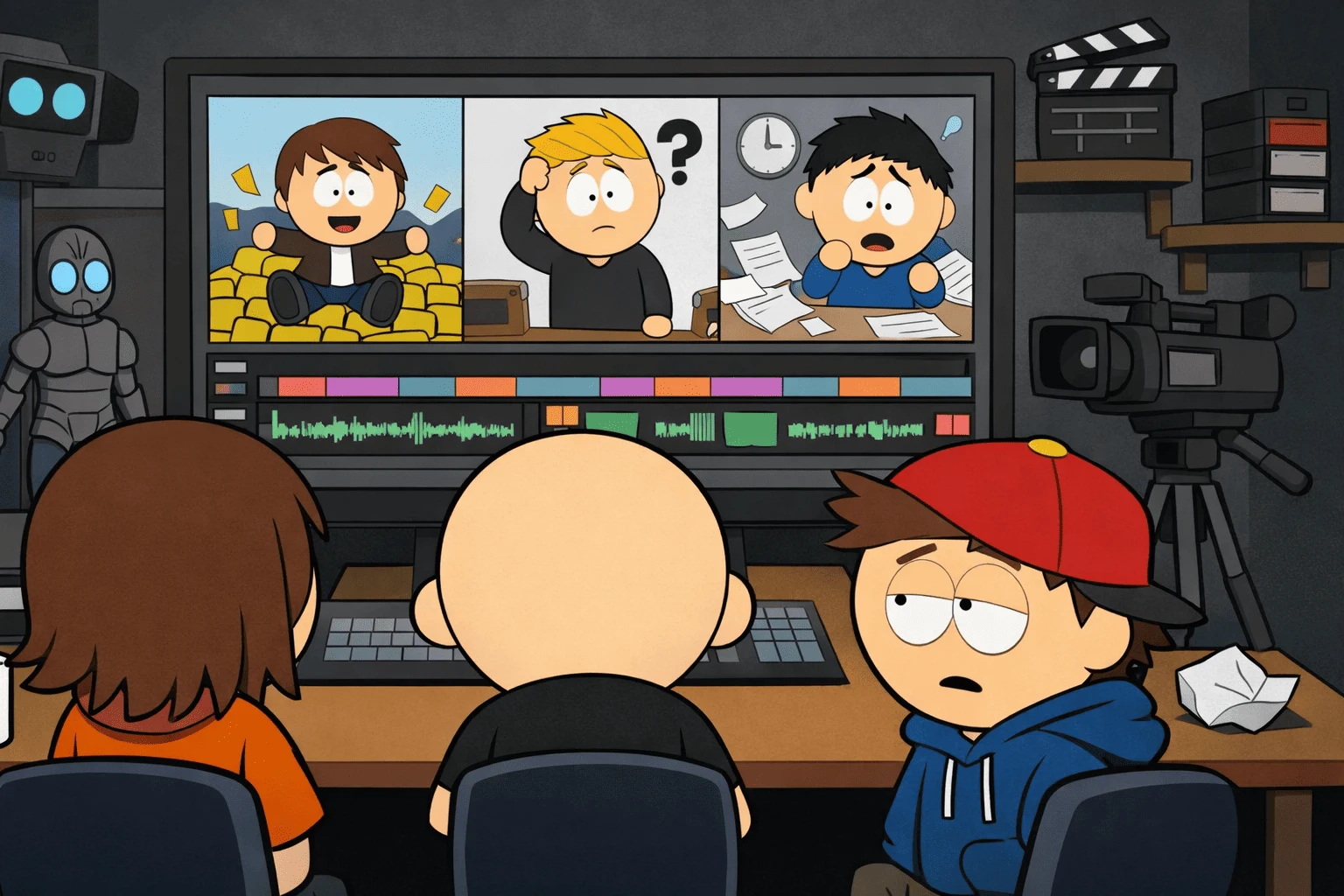
Table of Contents
- The real issue is not short attention spans
- What a short story must do
- Breakdown #1: The point is unclear
- Breakdown #2: There are no human consequences
- Breakdown #3: The short explains but does not move
- Breakdown #4: The emotional level stays flat
- Breakdown #5: The opening wastes the first seconds
- Breakdown #6: There is no tension
- Breakdown #7: The ending adds nothing
- Breakdown #8: The voice has no point of view
- Breakdown #9: Optimization replaces thinking
- A simple structure that works
- How to use AI without losing control
- Why most prompts fail
- Editing matters more than generation
- Lines that usually weaken AI shorts
- What effective AI-assisted storytelling looks like
- FAQs
- Conclusion
AI-generated short videos are everywhere now. They are fast to make. They look polished. They often follow platform rules well.
And yet, many of them fail.
You watch the clip. You understand what was said. Then it disappears from memory. No impact. No pull. No reason to think about it again.
This failure has nothing to do with video length or tools. It comes from weak storytelling.
This piece explains why AI shorts fail at storytelling and how to fix it. The focus is on clear causes and practical fixes. No hype. No buzzwords. Just structure, intent, and clarity.
The real issue is not short attention spans
People say audiences cannot focus anymore. That is not true.
People focus all the time. They focus on things that feel meaningful.
Short stories have always worked. Jokes. Proverbs. Headlines. Even warnings on signs. They work because they are shaped with purpose.
AI shorts fail because purpose is missing.
AI can produce language.
It does not understand why something should exist.
Storytelling starts with that question.
What a short story must do
Short storytelling has strict limits.
You do not have space for background history, broad explanations, or soft conclusions.
You need only a few things.
A clear idea.
A reason to care.
A shift in understanding.
When one of these is missing, the short collapses.
Most AI shorts miss more than one.
Breakdown #1: The point is unclear
Many AI shorts sound busy. They talk fast. They cover ground.
They do not land anywhere.
You finish watching and feel unsure what you were meant to take away.
Why this happens
AI tries to include everything related to a topic.
It avoids choosing one angle.
That leads to content without direction.
Stories need direction.
How to fix it
Before writing or generating anything, answer one question.
What should the viewer understand after this ends?
Write the answer in one sentence.
That sentence becomes the filter.
If a line does not support it, cut the line.
Clarity beats completeness every time.
Breakdown #2: There are no human consequences
AI shorts often describe systems, trends, or tools.
They rarely show how a real person is affected.
Without consequences, information feels distant.
Why this happens
AI defaults to neutral language.
Neutral language avoids risk.
Risk is where engagement lives.
How to fix it
Add one human consequence.
Ask who feels this problem.
Show a moment of friction.
Show confusion.
Show wasted effort.
You only need one clear example.
Breakdown #3: The short explains but does not move
Many AI shorts teach something.
They do not take the viewer anywhere.
Nothing changes from start to finish.
Why this happens
AI is strong at explanation.
It struggles with progression unless guided.
How to fix it
Use a before and after structure.
Before, something is unclear, wrong, or inefficient.
After, something makes sense, works better, or feels resolved.
That shift creates motion.
Motion creates story.
Breakdown #4: The emotional level stays flat
Many AI shorts sound calm throughout.
Calm is fine. Flat is not.
Emotion gives shape to meaning.
Why this happens
AI smooths tone by default.
It avoids strong emotional turns.
How to fix it
Add a small emotional change.
Start with doubt or curiosity.
End with clarity or relief.
The change does not need to be dramatic.
It just needs to exist.
Breakdown #5: The opening wastes the first seconds
The first seconds decide everything.
AI shorts often start by explaining the topic.
Explanation slows momentum.
Why this happens
AI follows academic structure.
Short video does not.
How to fix it
Open with the most specific line.
A direct claim works.
A clear problem works.
A contradiction works.
Context can come later.
Breakdown #6: There is no tension
Without tension, viewers drift.
Many AI shorts feel smooth and agreeable from start to end.
That removes urgency.
Why this happens
AI avoids disagreement.
It tries to sound balanced.
Stories need friction.
How to fix it
Introduce resistance.
Challenge a common belief.
Show a mistake people make.
Point out a gap between expectation and reality.
Tension does not require conflict between people.
It requires contrast.
Breakdown #7: The ending adds nothing
AI shorts often end with a summary.
Summaries close information.
They do not leave meaning behind.
Why this happens
AI is trained to conclude cleanly.
Stories need resolution, not repetition.
How to fix it
End with a realization.
What should the viewer now see differently?
Say it plainly.
Then stop.
Breakdown #8: The voice has no point of view
Many AI shorts sound polished.
They do not sound grounded.
Tone without perspective feels hollow.
Why this happens
AI can copy style.
It does not have lived experience.
How to fix it
Anchor the voice.
Write from a position.
Someone who noticed a pattern.
Someone who made a mistake.
Someone correcting a false assumption.
Perspective creates trust.
Breakdown #9: Optimization replaces thinking
Many shorts are built around metrics.
Retention. Hooks. Fast cuts.
Meaning gets lost.
Why this happens
Platforms reward attention.
Creators respond.
How to fix it
Structure comes first.
Clear ideas hold attention better than tricks.
A simple structure that works
You do not need complex frameworks.
This structure fixes most AI shorts.
- Open with a clear hook
- Name the problem
- Add friction
- Show the shift
- End with meaning
Miss one step and the short weakens.
How to use AI without losing control
AI should assist.
It should not decide.
Use AI to draft language, test phrasing, and tighten sentences.
Do not let it decide the main idea, the stakes, or the ending.
Those are human choices.
Why most prompts fail
Many prompts focus on surface quality.
They ask for engaging or viral scripts.
They do not define intent.
A better prompt starts with purpose.
Write a short showing why this mistake wastes time and how to avoid it.
That gives AI direction.
Editing matters more than generation
The first output is rarely good enough.
Most AI shorts fail because they are published too early.
Editing should focus on cutting excess lines, sharpening the point, and clarifying the shift.
Shorter often means stronger.
Lines that usually weaken AI shorts
Watch for vague statements, soft conclusions, repeated ideas, and neutral phrasing.
If a line feels safe, question it.
What effective AI-assisted storytelling looks like
Strong AI shorts feel deliberate.
They say one thing clearly.
They show why it matters.
They end with a thought that stays.
They do not try to impress.
They try to communicate something real.
FAQs
Why do AI shorts feel generic?
They rely on common language patterns without clear intent.
Can AI tell good stories alone?
No. It can help once the story decisions are made.
Is short-form storytelling harder than long-form?
Yes. There is less room for error.
Do visuals matter more than the script?
No. Visuals support structure. They do not replace it.
How short can a story be?
As long as there is a clear shift, it works.
What improves AI shorts fastest?
Decide the ending before writing the opening.
Conclusion
AI shorts fail at storytelling for one simple reason.
They generate language without purpose.
Stories require choices.
They require clarity.
They require meaning.
When structure comes first, AI becomes useful.
Without structure, it produces noise.
Better prompts help.
Better thinking matters more.